
3 Fears That Keep Christian Women From Selling With Confidence (and How to Overcome Them Biblically)
Have you ever found yourself avoiding a sales conversation—even when you know your service could bless someone?
Maybe you’ve said things like, “I don’t want to seem pushy,” or “No one can afford this,” and suddenly you talk yourself out of making the offer altogether.
If you’ve ever felt that tension between wanting to serve and fearing the sale, you’re not alone. Many Christian women face this exact struggle—not because they lack skill, but because they’ve internalized subtle lies about money, worth, and God’s provision.
YOU CAN WATCH THE FULL EPISODE ON YOUTUBE HERE
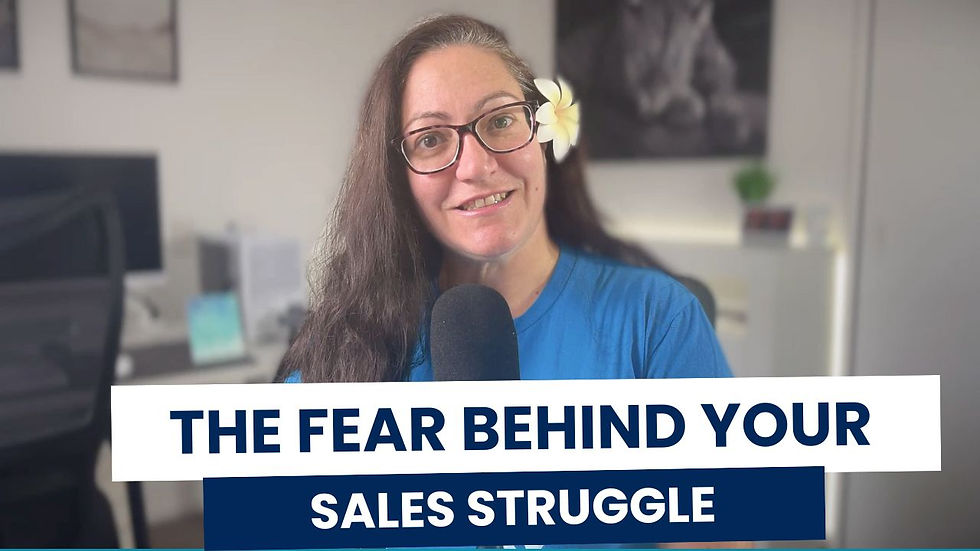
Why So Many Christian Women Struggle to Sell Confidently
When I coach women in business, I often see that what looks like a “sales problem” is actually a mindset problem.
It’s not about the script, the pricing, or even the confidence level. It’s about the beliefs underneath those actions—beliefs that whisper:
“If I charge, people will think I’m greedy.”“If no one buys, I must not be called.”“If it’s expensive, no one will say yes.”
These thoughts don’t just create hesitation. They actually keep women from walking in the fullness of their calling.
Today, let’s uncover three common fears that keep Christian women from selling with confidence—and see how God’s Word reframes each one.
1. The Fear of Greed
She thinks: “If I charge, people will think I’m in it for the money.”
She feels: guilt every time she shares her prices.
She does: discounts too quickly or avoids selling altogether.
This fear often comes from a misunderstanding of money and humility. Many Christian women have been taught that desiring financial provision is selfish or unspiritual—but Scripture paints a different picture.
“For the Scripture says, ‘You shall not muzzle an ox when it treads out the grain,’ and, ‘The laborer deserves his wages.’”— 1 Timothy 5:18 (ESV)
Biblical Reframe:
Paul was teaching Timothy how to lead the church, quoting both the Law (Deut. 25:4) and Jesus (Luke 10:7) to show that workers—farmers, pastors, ministers—deserve wages.
Charging for your work is not greed; it’s biblical. Undervaluing your labor isn’t humility—it denies God’s design for provision, when you are called to have a business.
2. The Fear of Failure
She thinks: “If no one buys, maybe I’m not called.”
She feels: shame and self-doubt after every slow launch.
She does: hides her gifts or stops showing up.
When sales are slow, it’s easy to equate results with calling. But Scripture reminds us that success isn’t measured by outcomes—it’s measured by faithfulness.
“Not that we are sufficient in ourselves to claim anything as coming from us, but our sufficiency is from God.”— 2 Corinthians 3:5 (ESV)
Biblical Reframe:
Paul’s confidence in ministry didn’t come from performance or popularity—it came from God.
Your calling isn’t proved or disproved by sales numbers.Your sufficiency is in Christ, not conversions.Faithfulness—not results—is what defines success.
3. The Fear of Affordability
She thinks: “No one can afford what I offer.”
She feels: pity or responsibility for others’ finances.
She does: lowers prices or avoids presenting offers.
This fear often sounds compassionate, but it subtly places you in God’s role as provider.
“And my God will supply every need of yours according to his riches in glory in Christ Jesus.”— Philippians 4:19 (ESV)
Biblical Reframe:
Paul wrote this to the Philippians who had generously supported his ministry. He reminded them that God—not man—meets needs.
You are not the provider—God is. Your job is to steward your calling faithfully and extend the invitation.Their decision is between them and Him.
A True Story of Transformation
One of my clients once told me she felt “paralyzed” during discovery calls. She loved what she did but constantly discounted her services or avoided following up.
Using my F.L.I.P. the Table Method™, we worked to Find the root of her fear. We realized she was carrying a "scarcity mindset" that made her feel guilty for succeeding.
By Leaning on God and Instilling new thoughts, she began presenting her full price confidently.
Within weeks, she signed new clients without a hint of anxiety.
She told me:
“You made it fun—and now I actually enjoy looking at my numbers. I can see what God has blessed me with and how I can steward it well.”
Your "Confidence Challenge" This Week
Before your next sales conversation or before you post that offer, choose one of the verses above. Speak it out loud. Let Scripture—not fear—guide how you show up. Selling with confidence can be fun.
Remember:
Charging fairly is Biblical.
Results don’t define your worth.
You are not the Provider—God is.
When your mindset is rooted in Truth, selling becomes a form of worship and stewardship, not striving.
Ready to Sell with Confidence?
Take the Free Money Mindset Quiz to uncover your hidden blocks.
Join the 90-Day Mentorship Program where we use the F.L.I.P. framework to help you earn with peace and sell without the "ick."
Selling can be sacred when your heart is anchored in Him.
Take care.
Raina | Biblical Mindset Discipleship Coach AKA The Fun Money Coach
Connect on IG: @christianmoneymindset
Schedule a time to connect : https://tidycal.com/funmoneyhabits/clarity-call


